Backpacks vs. Showers: How Mission Drift Perpetuates the Problem of “Deserving” Social Issues
Yesterday, I watched the recording of my local City Council meeting. The city council meant well. I want to believe that. I do believe that.
But when I sat in that meeting and watched $5,000 meant for a mobile shower and community resource center quietly get reassigned to a student backpack giveaway, something in me sank.

🔗 Read the full article
It wasn’t the backpacks. I’m a parent. I understand how far a fresh start, hygiene supplies, and a sturdy zipper can go. It was the trade-off—the unspoken narrative that some needs are just more… acceptable. More photo-friendly. More fundable. That students with backpacks win public sympathy faster than unhoused individuals (some of which may be these same students) with no place to bathe and maintain a sense of dignity. Also, this is a school district issue. Let them pay for it.
This is what mission drift looks like in real time: when the original intent—to provide basic hygiene access for those living without shelter—gets bumped for a feel-good event that checks boxes and garners praise but doesn’t fix the root issue. And no one blinks. Because the alternative is harder. More uncomfortable. Less palatable.
This piece is not about blame. It’s about patterns. It’s about the ways public institutions and nonprofit spaces start to quietly sort social issues into “doable” and “too much.” Into “deserving” and “not quite.”
Let’s talk about that. About what happens when the real need gets reframed as a political liability—and how mission drift is not just a paperwork issue, but a deeply human one.
When Mission Drift Isn’t Just Strategic—It’s Structural
Mission drift doesn’t happen in a vacuum. It happens in rooms like that city council meeting. It happens when everyone agrees that “something is better than nothing,” without stopping to ask:
Better for whom? At whose expense?
The mobile shower funds weren’t just about plumbing and trailers; about the resource center that this community desperately needs. They were about dignity. About meeting basic human needs. About responding to the growing, visible number of unhoused individuals in our community—not with judgment, but with infrastructure. With care.
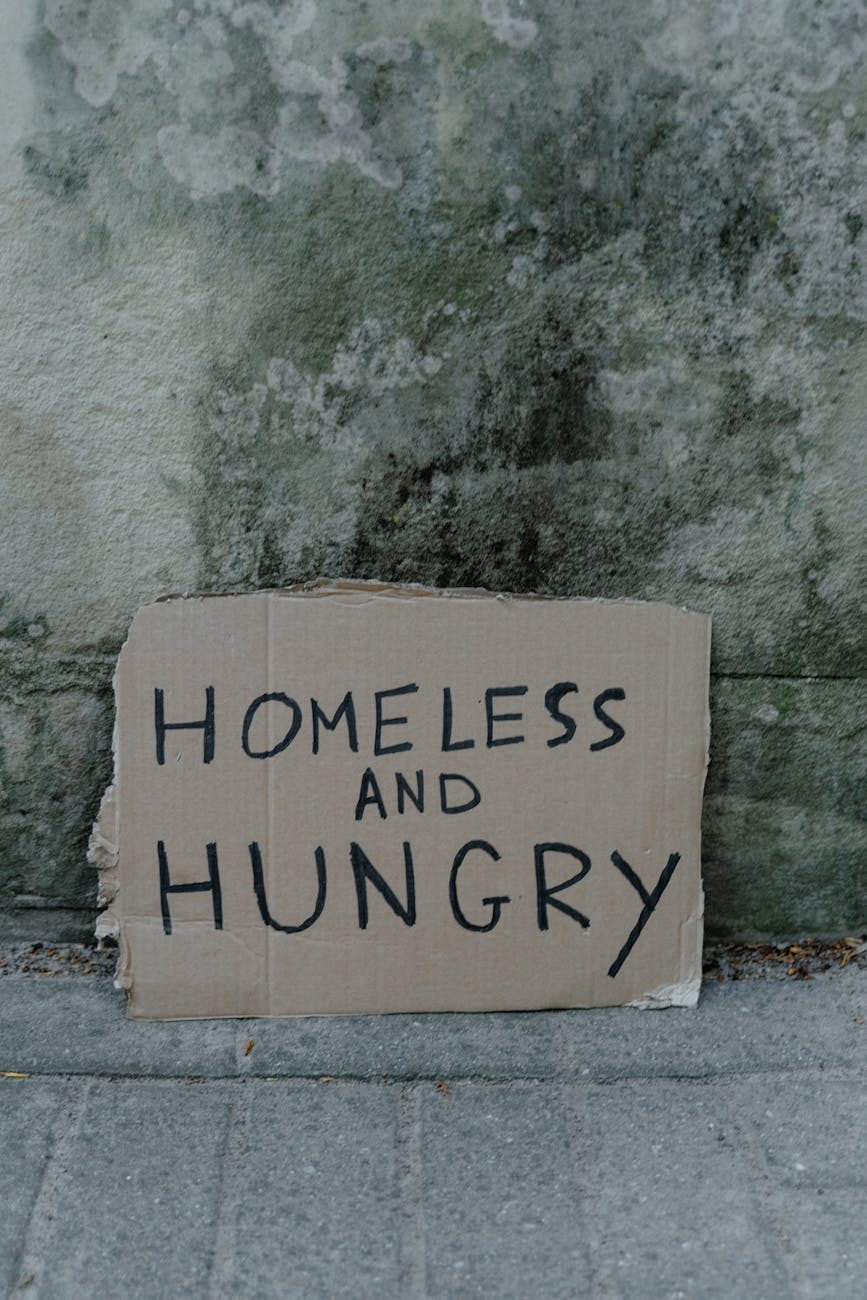
But somehow, that became negotiable.
The moment it was suggested those funds might “go to waste” if unused—then swiftly reallocated to a backpack giveaway for students—it became clear: this wasn’t just a budget decision. It was a comfort decision. One that revealed which stories, which bodies, and which problems we’re more willing to rally around.
The Optics of Worthiness: How We Quietly Rank Social Needs
Backpacks are easy to celebrate. They represent preparation, possibility—a tangible expression of care that everyone can get behind. A backpack giveaway is seen as an immediate good. It’s visible. It’s noncontroversial. It feels like a win.
Showers? Those are harder. They speak to something more uncomfortable. Not just unmet needs, but ongoing neglect. Providing access to hygiene reminds us that some of our neighbors don’t have a bathroom, a bedroom, or a safe place to sleep. It challenges our ideas of normalcy, of worthiness, of how far the safety net really stretches.
And so, when forced to choose—whether consciously or not—we often pick the easier symbol. The one that feels hopeful and light. We pick backpacks over showers. The familiar over the urgent. The surface win over the structural work.
That’s mission drift.

🖼️ Image courtesy of J.H. Bufford & Co, public domain via DPLA
And it’s not limited to city budgets or local council votes. Mission drift is something that shows up across sectors—and has for decades. It’s well documented in nonprofit studies, public policy critiques, healthcare evaluations, educational reform, and even corporate governance. It’s what happens when the original goal becomes distorted by survival strategies, reputation management, or public palatability.
In social work, we’ve seen this too. The field itself was founded on moral-based charity—early case workers were tasked with distinguishing between the “deserving” and the “undeserving” poor. That mindset hasn’t disappeared. It simply evolved. Today, it shows up as eligibility requirements that punish people for being too poor, too sick, or too unwell to be “compliant.” It shows up as agencies shifting focus from long-term systems change to funder-friendly metrics. It shows up as trauma-informed initiatives that skip the accountability and rest on the branding.
Mission drift is not just a strategy issue—it’s a symptom of deeper discomfort with systemic care. It allows us to help in ways that don’t implicate us, that don’t demand too much, that feel safe and socially acceptable.
And in small towns, the consequences are amplified. There are fewer watchdogs. Fewer journalists. Fewer organized advocates. Less understanding of rights and processes. Decisions can be made in a room with a handful of people and ripple out for years.
When we allow mission drift to dictate our priorities—choosing what’s easy to sell over what’s necessary to solve—we risk entrenching the very issues we claim to be addressing.
Around the world, this shows up in similar ways: short-term aid that doesn’t address infrastructure, crisis responses without long-term strategy, feel-good campaigns that center donor comfort over community transformation.
📄 Read the full report
So no—it’s not just my small town. It’s not just this backpack vote. It’s a pattern. A deeply human one. But also a deeply political one.
And once you name it for what it is—not just misalignment, but a form of systemic avoidance disguised as helpfulness—it becomes much harder to justify.
That’s why this conversation matters. Because the more we normalize calling it what it is, the more space we create to realign with the original purpose: to meet needs, not just narratives. To build justice, not just goodwill.
The Long-Term Cost of the Short-Term Fix
Let’s not forget: this money was already allocated. This wasn’t a fresh proposal competing with others—it was a funded project. A project the community had already supported, already budgeted for. The shower and resource center initiative wasn’t just a line item—it was a promise.
As reported in the meeting, the project had seen very little progress over the last two years. And now, because of that delay, the council voted to repurpose $5,000 of it—redirecting it to a completely separate initiative. Why? Because the unused portion of the funds was set to roll back into the general fund in the next fiscal year.
But that opens the door to bigger questions:
Isn’t it the council’s job to follow up before that happens?
When was the last time this project was reviewed or updated publicly?
Were any barriers identified?
Were staffing or logistical challenges brought to light?
Were community partners looped in, asked to help, or even informed that the project was at risk of stalling?
In a span of two years, we’ve had to recover from a pandemic, staffing shortages, turnover across sectors, and rising homelessness. The context has changed. Maybe the solution needed to shift with it—but shouldn’t that have been a discussion? A workshop? A re-engagement strategy?
Instead, we got a last-minute reallocation to a backpack giveaway—a program that already exists, is redundant, and frankly, could have waited until next year. There was no community commentary during the vote. No robust deliberation. And no clear plan for what happens to the rest of the money or the leftover supplies. All we heard was, “They’ll go to teachers in the district.”
Okay. But which teachers? Which classrooms? What process determines that? Because if you don’t have a plan, inequity fills the gap. The most visible, vocal, or well-resourced schools often benefit most. And once again, we see how quickly public support shifts toward groups perceived as more “deserving”—at the expense of those seen as more difficult to serve.
And here’s the quiet consequence that no one in the room named:
This kind of rug-pull moment doesn’t just affect the budget. It shakes public trust.

If I were someone who spent two years trying to move that shower project forward, or who donated time or advocacy toward that resource center, I’d be asking: Why did I bother? If funds can be rerouted without warning, without community dialogue, and without anyone standing up to ask for accountability—why would anyone step forward next time?
These aren’t just financial decisions. They’re narrative decisions. They send a message about what gets prioritized—and who gets left behind when “progress” doesn’t come fast enough.
And if we’re not willing to name that as mission drift, we’re missing the point entirely.
So What Now?
We name it. We speak up—kindly, but unapologetically. We push for transparency in how public funds are shifted, reframed, or quietly reabsorbed. We ask our leaders to show us how their decisions reflect the values they claim to hold.
And we check ourselves, too.
Because I’ve been there—feeling like the more palatable, PR-friendly choice is the easier ask. But ease isn’t always equity. And comfort isn’t the same as justice.
If you’re reading this, you probably already feel the tension I’m describing. You’ve seen it in your own workplace, your local school board, your volunteer committee. This isn’t just about my small town. It’s about how we all decide what matters.
And who gets to matter more.
Let’s Keep This Real
I write about this stuff not as an outsider, but as someone who lives here. Who works in systems. Who’s raising kids in a town where council meetings still shape outcomes in real time.
If this piece resonated with you, you might want to check out:
- My articles
- A four-step process to prevent mission drift
💬 Got a story of your own? Hit reply or leave a comment. I want to hear what your version of “backpacks vs. showers” looks like.
Let’s name it—and build something better from there.
 Welcome to BKay's Brain
Leave a comment